Are Peptides Legal in the UK? Complete 2026 Guide
8 min read
Twój koszyk jest pusty
Zacznij dodawać peptydy badawcze do koszyka.
MOŻE CI SIĘ SPODOBAĆ
Tirzepatide represents a paradigm shift in metabolic peptide research. Unlike single-target compounds, this dual GIP/GLP-1 receptor agonist engages two complementary incretin pathways simultaneously — an approach that landmark clinical trials such as SURPASS and SURMOUNT have shown may produce outcomes beyond what either pathway achieves alone. Research suggests dual incretin agonism may address the complex, multi-signal nature of appetite regulation and energy homeostasis at a fundamental level.
15+
PUBLISHED PHASE III TRIALS
>99%
PURITY GRADE (HPLC VERIFIED)
72wk
LONGEST STUDIED DURATION
2x
DUAL RECEPTOR MECHANISM
Zrozumienie mechanizmu działania stojącego za badaniami
Tirzepatide binds to both GIP (glucose-dependent insulinotropic polypeptide) and GLP-1 (glucagon-like peptide-1) receptors in the gut, pancreas, and central nervous system. Research indicates this dual mechanism engages complementary metabolic pathways that single-agonist compounds cannot reach. The GIP component appears to enhance fat oxidation, while GLP-1 signalling modulates appetite at the hypothalamic level.
Preclinical and clinical data suggest tirzepatide significantly influences gastric emptying rate and central appetite signalling. Studies indicate subjects report reduced hunger, earlier satiety, and decreased food preoccupation. The mechanism appears to work upstream of willpower — reshaping the neurochemical signals that drive eating behaviour rather than relying on caloric restriction alone.
Research demonstrates tirzepatide may improve glucose-stimulated insulin secretion and reduce insulin resistance in peripheral tissues. Published data from SURPASS trials shows meaningful improvements in HbA1c markers alongside metabolic changes. This dual effect on both weight and glycaemic control distinguishes tirzepatide from purely appetite-focused interventions.
Unlike short-acting compounds, tirzepatide's pharmacokinetic profile supports once-weekly dosing with sustained receptor occupancy. Studies suggest this consistent signalling may help avoid the metabolic adaptation (plateau effect) commonly observed with caloric restriction. Research indicates progressive results over 12 to 72 weeks of consistent administration.
Tirzepatide simultaneously engages GIP and GLP-1 receptors, a mechanism studied in over 15 Phase III trials. Research suggests this dual approach may produce metabolic effects beyond what single-receptor agonists achieve, potentially addressing multiple aspects of energy homeostasis in parallel.
Only dual GIP/GLP-1 agonist available in research-grade pen format
Studies indicate tirzepatide may fundamentally alter hunger and satiety signalling at the hypothalamic level. Research subjects consistently report meaningful reductions in appetite, food preoccupation, and cravings — suggesting the mechanism operates upstream of conscious dietary choices.
Published SURPASS trial data demonstrates tirzepatide's role in glucose homeostasis research. Studies show potential improvements in insulin sensitivity and glucose-stimulated insulin secretion, making it a compound of interest for researchers studying the intersection of metabolic health and body composition.
Studied across 6 SURPASS trials with over 13,000 participants
Research indicates tirzepatide use in clinical trials was associated with favourable changes in cardiovascular risk markers including blood pressure, lipid profiles, and inflammatory biomarkers. The SURMOUNT-MMO trial is currently evaluating long-term cardiovascular outcomes in large populations.
The pharmacokinetic profile of tirzepatide supports once-weekly subcutaneous administration, reducing injection frequency compared to daily protocols. Research confirms sustained receptor engagement throughout the dosing interval, supporting consistent metabolic signalling without daily compliance requirements.
Clinical protocols typically employ a gradual dose escalation strategy, starting low and increasing over weeks. Research suggests this titration approach may optimise tolerability while allowing the body to adapt. ORYN pens support precision dosing to facilitate structured research protocols.
Gotowe do użycia, wstępnie zmieszane systemy dostarczania peptydów badawczych klasy premium
Badaczy i profesjonalistów pracujących w tych dziedzinach
Investigating dual incretin pathways in controlled settings. ORYN provides research-grade tirzepatide in precise pen delivery systems designed for consistent dosing protocols.
Studying the relationship between GIP/GLP-1 receptor agonism and changes in fat mass, lean mass preservation, and metabolic rate during caloric deficit conditions.
Designing weight management research protocols that require reliable, consistent compound delivery with documented purity and stability profiles.
Examining the effects of dual incretin agonism on insulin sensitivity, beta-cell function, and broader hormonal cascades related to energy regulation.
Why Researchers Choose ORYN Tirzepatide Pens
A structured approach combining tirzepatide with a stepped dosing protocol. Research suggests starting at lower doses and titrating upward over 4-8 weeks may optimise receptor response and tolerability. The MediT Pen offers a higher-dose option for advanced research phases.
CZAS TRWANIA
12-72 weeks
CZĘSTOTLIWOŚĆ
Once weekly subcutaneous
PRODUCTS
2 peptides
8 min read
7 min read
9 min read
12 min read
Metabolic peptides are compounds that interact with the body's metabolic signalling pathways. Tirzepatide is a dual GIP/GLP-1 receptor agonist, meaning it activates two key hormonal pathways involved in appetite regulation, insulin secretion, and energy metabolism.
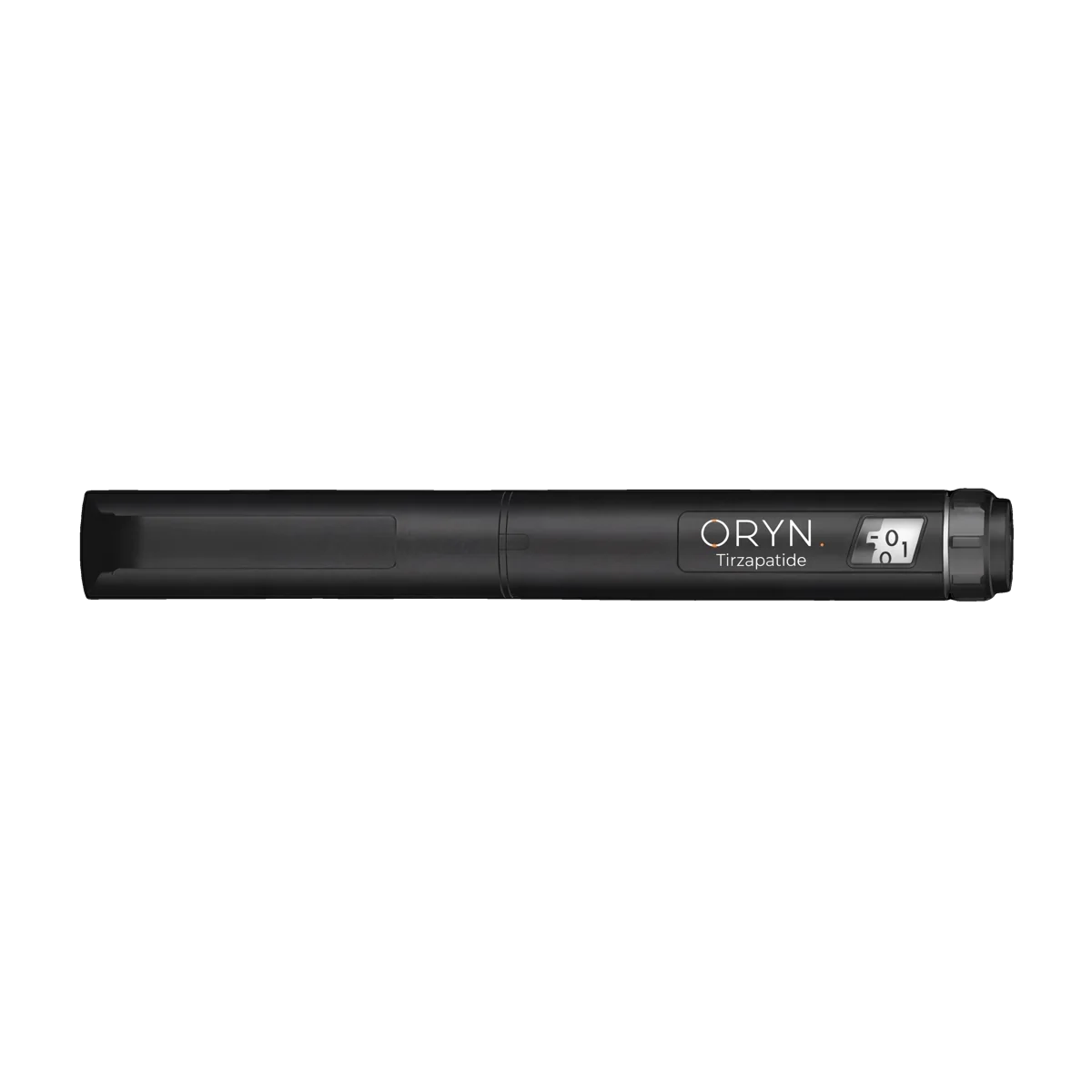
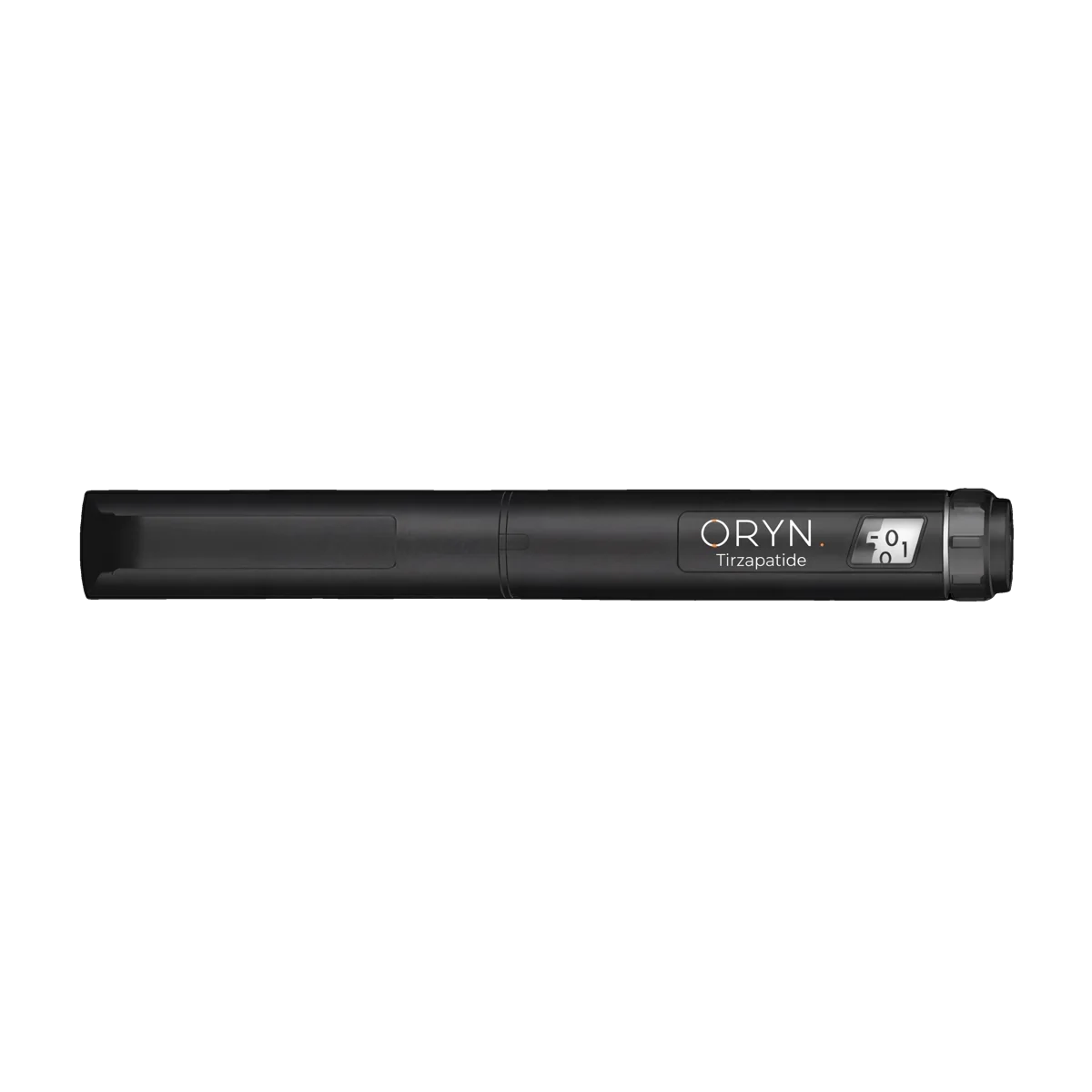
The ORYN Tirzepatide Pen is a multi-dose pen system with 10mg of tirzepatide for 30-day precision dosing. The MediT Pen is a prefilled, single-use injection pen containing 40mg tirzepatide, designed for once-weekly administration.
Tirzepatide is a dual GIP/GLP-1 agonist (activates two receptors), while semaglutide is a GLP-1 agonist only. Clinical research has shown tirzepatide may offer enhanced metabolic benefits due to its dual mechanism of action.
Research peptides including tirzepatide are legal to purchase for research purposes in the UK. They are not licensed for self-administration. ORYN products are sold strictly for research use only.
Legal under MHRA rules. BPC-157, tirzepatide & NAD+ pens with next-day UK delivery from £99. >99% purity, GMP certified. Shop now.
ARTICLETirzepatide hit 20.9% weight loss vs semaglutide's 14.9% in trials. We compare mechanisms, side effects, and cost. Head-to-head data inside.
ARTICLETirzepatide, semaglutide, and 3 more metabolic peptides compared. Clinical trial data, dosing, side effects, and UK pricing from €169. Expert ranked.
COMPARISONPorównaj tirzepatyd i semaglutyd w badaniach metabolicznych. Podwójny vs pojedynczy receptor, dane skuteczności, działania niepożądane i ceny. Kup peny tirzepatydu.
COMPARISONPorównaj ORYN Tirzepatyd Pen (10mg codziennie) vs MediT Pen (40mg co tydzień). Elastyczność dawkowania, wygoda i cena.
ENCYCLOPEDIADual GIP/GLP-1 Receptor Agonist (Incretin Mimetic). Masa cząsteczkowa: 4813.45 Da. Poznaj mechanizm działania, kluczowe badania i zastosowania badawcze.
BUNDLETirzepatyd w podwójnym formacie dla kompleksowego wsparcia metabolicznego
PROTOCOLProtokół badawczy dla pena peptydowego Tirzepatyd badającego podwójny agonizm receptorów GIP/GLP-1. Poznaj mechanizmy metaboliczne, harmonogramy titracji dawek i dane z kluczowych badań klinicznych.
FAQFAQ badawcze dotyczące Tirzepatide. Podwójny agonista GIP/GLP-1, badania metaboliczne, czystość i system pisaka ORYN.
CATEGORYResearch-grade recovery peptide pens. BPC-157 and TB-500 for tissue repair, wound healing, and inflammation research. >99% purity, UK delivery.
CATEGORYResearch-grade anti-aging peptide pens. GHK-Cu copper peptide, NAD+ and Glutathione for longevity research. >99% purity, next-day UK delivery.
Access research-grade tirzepatide in precision pen delivery — the same dual incretin molecule studied across 15+ Phase III clinical trials.